
How to be less reactive in relationships
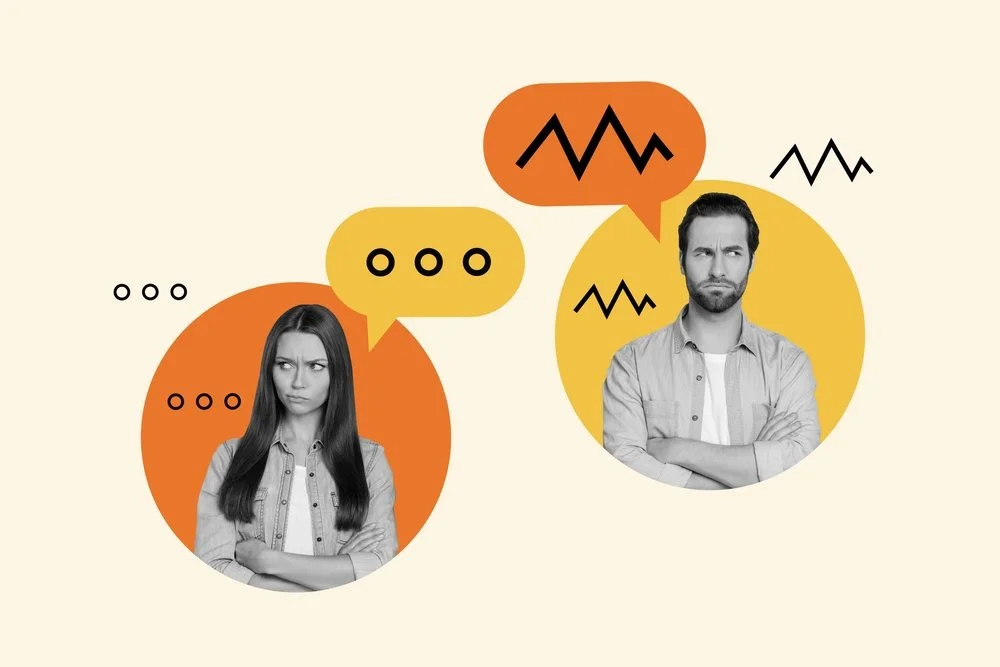
Have you noticed that when we have difficult moments with people, we can suddenly react in a way that feels out of character? You may also notice that the other person may also be acting differently. Both sides may display feelings such as being aggressive, angry, sulky, completely withdrawn, passive-aggressive or ultra-controlling? This can feel uncomfortable to the person on the receiving end, but often these feelings are also unnerving for the person doing the reacting.
As a psychotherapeutic counsellor, I often have clients asking how to get rid of their reactions when it comes to family, relationship or work dynamics. My simple answer is that it’s impossible to get rid of that initial reaction but it is possible to do something about it afterwards. Whatever emotion bubbles up first in the situation will be of the utmost significance because it tells us something important about us and our past.
Our behaviour is a blueprint as to how we were treated in childhood or young adulthood. As human beings, we are built to find a way to protect ourselves and survive in any way possible. Most of the time, we adapt ourselves around caregivers and adults that appear to have more power and control. If we have a critical caregiver, we learn to people-please or become passive-aggressive. If we have an angry caregiver we may learn to withdraw or fight back. If we have a caregiver who is absent or doesn’t notice, we may learn to get attention by being ambitious, loud, physically unwell or naughty (negative attention is better than no attention at all), and if we have an uncaring or neglectful caregiver, we may learn to be super independent, controlling and unable to accept help or love from others due to trust issues.
In Transactional Analysis – a particularly useful therapeutic theory with regards to how we react with people – we would refer to this way of adapting ourselves to caregivers as “the adapted child.” Even though we grow up to become adults, that little kid still exists within us and it’s that little kid that behaves in ways that sometimes knocks us off guard, takes us away from our core adult self and catapults us back into an unsafe past.
Our reactions are born from these difficult or traumatic moments in our past. We cannot erase that. In fact, it’s very important we don’t. When we try to erase a reaction, we are basically criticising ourselves and telling that young part that it’s wrong to behave in that way. It’s like telling off a child for shouting when it’s drowning.
When I was training to become a counsellor, I observed something interesting about my reactions and the reactions of my fellow students. The atmosphere in the classroom was normally highly emotionally charged as we were constantly being asked to reflect on how the work was making us feel, therefore most of the people in the class found their feelings were very near to the surface. What I observed was everyone in that classroom tended to react to others in the room from the age they had been when they experienced some kind of trauma or difficulty in their lives.
Suddenly my perspective changed. When I looked around that classroom, I didn't see people in their 30s, 40s or 50s. What I saw was a 3-year-old, a 12-year-old, a 19-year-old, or a 5-year-old. I suddenly realized that most adults are all just going through the world like little adapted children who are trying their best to survive. And in that moment, my reactions softened.
So how do we cope with our own reactions? In Transactional Analysis our main goal is to notice the adapted child within us, comfort it and then try to get back to our adult core self who is more level-headed and able to cope.
Sometimes we don’t have time to notice before we speak or behave if it’s in the moment with someone face to face. But if we are able, ask to take some time out so you can take a step back and observe your childlike self. Ask yourself:
- What is this reminding me of?
- What is this person bringing up in me?
- Is it reminding me of a particular situation or a particular person in my past?
- What age am I with these feelings?
- What am I worried will happen?
- What is the feeling underneath? Do I feel scared or worried? Do I feel threatened? Is this making me feel sad?
It's also important to notice how our bodies are feeling in this moment because sometimes we cannot connect with our emotions, especially if we're someone who disassociates if feelings become too overwhelming. But if you can connect a similar bodily feeling—a fast heart-beat, a stomach tightening, or a sudden headache, a shudder in the shoulders or a need to shrink back – it can help us connect to an earlier time. Notice how your body is feeling and whether that reminds you of a similar feeling that you had when you were younger, especially as a child.
Once we notice what our own childlike selves are doing in that moment, we can start to soften our own feelings, Internally, check in with the little kid you once were. What you DON’T want to do is start berating yourself by saying: “What the hell is wrong with you? Why can’t you just act normally?” (This is something I see in clients all the time – a critical voice that tells them they “should” be calm. Calmness is not actually a normal human reaction. It’s actually quite rare. A more normal human reaction is fear, anger and sadness. Sometimes people who are calm are actually those that avoid or disassociate feelings. So give yourself a break if you are having a reaction and remind yourself that you are just being human.)
Imagine you are talking to a frightened child and say: "It's okay to feel this. Don’t worry, I’m here. I’ll look after you. No one's going to hurt us.” Try to be understanding towards your childlike self and say, "I understand where this feeling comes from, I know what it reminds you of. But this particular situation is different. We’re not little anymore. We're in charge now, so we can make a choice that’s best for us."
Also, make sure you let that childlike-self know that you are going to stick up for it and look after it. This is really important because it creates a sense of safety and soothes any spiky reactions you may be having. Especially if it involves family where the reaction stems from the caregiver who gave you those feelings in the first place.
The next thing to do is to imagine the people involved as children too. This can be especially helpful in workplace scenarios or family dynamics. Even in professional circumstances where you may be working with highly qualified people where we expect people to act like grown-ups, when it comes to difficult conversations or conflicts, we all react from a childlike place. (Often people who react badly to criticism have come from a family of critical parents.) They too might be experiencing a situation that reminded them of a younger time, and they may be reacting like that out of a sense of threat and protection. Maybe they think that to act in this way is the only way they learned to protect themselves?
So also ask yourself:
- How might their childlike-self be reacting?
- Are they becoming upset, angry withdrawn, or sulky?
- Do I know anything about their past? How might that be influencing how they are reacting to me?
Communication is the next key thing. Are you able to explain how you are feeling and why that might be so, taking into account your past? You don’t have to go into great detail but sometimes giving someone an inkling about where your reaction is coming from can take the conflict and threat out of the conversation. If the person knows that it’s not personal and not them in particular that is causing the reaction, but a trigger from your past, then it can help take the heat out of the interaction.
Another tip is to make that other person feel safer, less judged, and to offer some kind of understanding in that moment as it might mean that their childlike-self softens a little too, just enough to have some space for communication, compromise, and maybe even shared compassion to happen. Being curious about their childlike-self might even allow them to open up too if it feels appropriate.
The most important thing in Transactional Analysis is to notice and take care of the child that still lives within us because no matter how old we get, our inner child never ages. We must learn to re-parent ourselves and become the caring and loving parent that always notices them, always looks after them and always attends to their feelings.
For more help with your feelings, including depression and anxiety, take a look at our free online mental health resources by clicking on the button below.